- Helping students see their potential.
- Passionate about chemistry.
- An antibiotic researcher.
- A problem solver.
- Finding the humor in things.

Professor Sarah Kirk’s research involves improving antibiotics.

Kirk works one-on-one with numerous students in the lab.

Many of Kirk’s students have gone on to earn prestigious national scholarships.
Learn More
IAM
Demonstrating the Relevance of Chemistry
Sarah Kirk nurtures future researchers while showing them the importance of chemistry in the real world.
It's nearly impossible to talk with a Willamette chemistry student without hearing the name Sarah Kirk.
In Kirk's seven years at Willamette, the associate professor has mentored 25 student research projects, many through the Science Collaborative Research Program and the Presidential Scholarship program, a Willamette award that provides one semester's tuition and money for research expenses.
Many of her students have presented their work regionally and nationally, and gone on to earn prestigious national scholarships at the undergraduate and graduate level.
This impressive record is in addition to guiding students daily in the classroom and the lab.
Mentoring Students
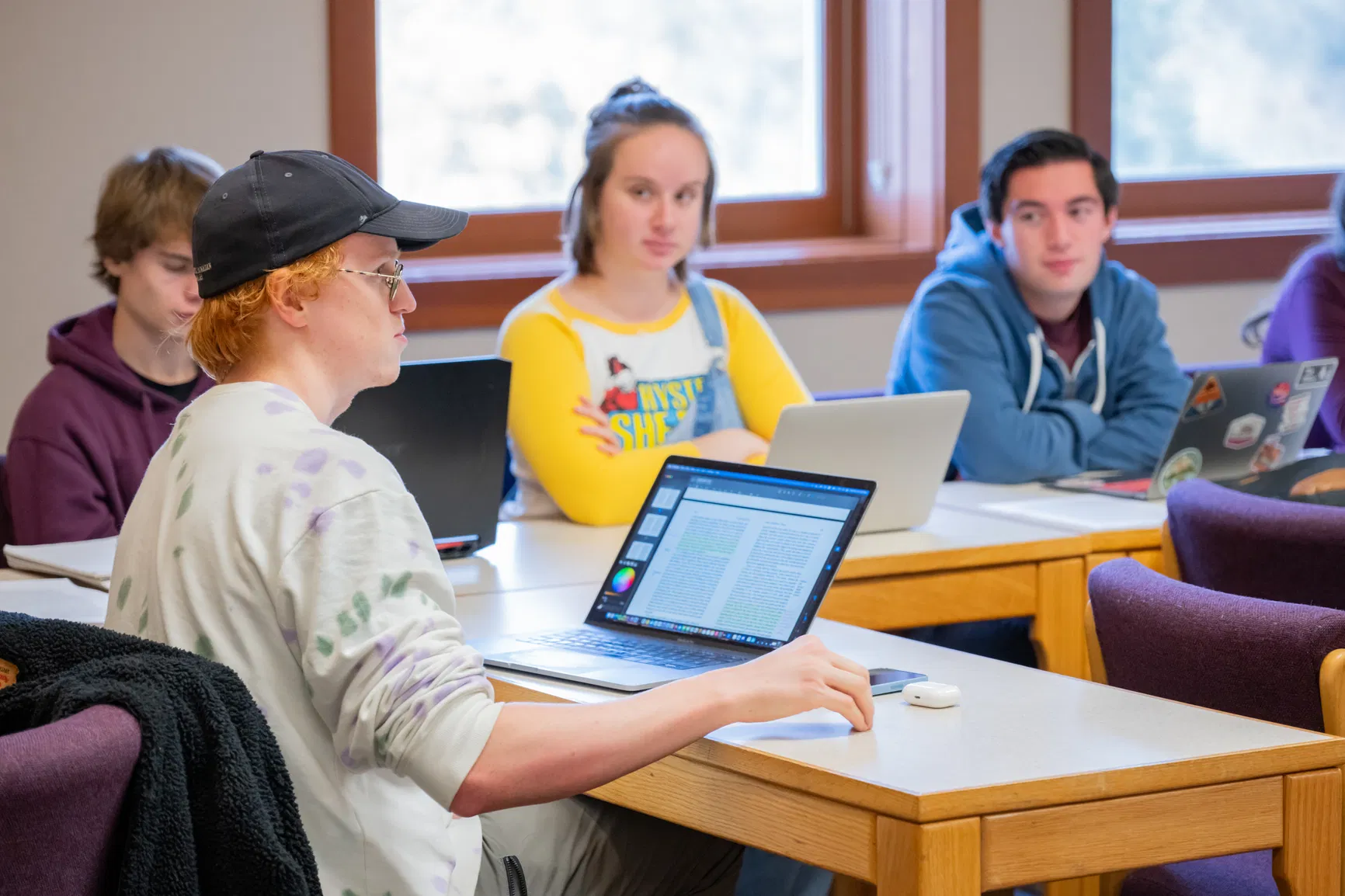
"I invest myself largely in the training of students," Kirk says. "If I were working on my own in a lab, I could probably accomplish far more, far faster. But as a professor, I can work with students and train them so that they go on and accomplish far more as a group than I ever could by myself. A lot of my job is about seeing potential in students and helping them recognize it."
By bringing her students into the lab with her — and assisting them as they make their own discoveries — Kirk gives them a chance to take their chemistry skills to the next level, something many scientists don't experience as undergraduates.
"Once we send a student to a prestigious graduate program, they do well because of the experiences they have had here. Then the next time a student from Willamette applies to that program, their application is considered more favorably due to the Willamette students who have come before them.
"Only so much learning can occur in the classroom," she adds. "A lot of the real learning happens outside, in places like the lab where the students can discover practical applications."
Real World Relevance
In Kirk's "Chemical Concepts and Applications" class, known informally as chemistry for non-science majors, she relates chemistry to an array of current events, including changes in the ozone layer and global warming.
"The whole idea is to show relevance and teach students how important chemistry is in their daily lives," she says.
Improving Antibiotics
When she enters the lab, Kirk's main research focus is modifying molecules to create more effective antibiotics.
She started out by studying HIV-fighting drugs. But eventually she turned her attention to more general antibiotics, specifically Neomycin, the active ingredient in Neosporin.
Neomycin is a topical drug that binds to nucleic acids (DNA or RNA) in the body. Kirk is trying to modify molecules in order to strengthen that binding — creating a better drug.
One of the goals is to create a form of Neomycin that could be taken orally to treat systemic illnesses.
"I want my research to have visible applications," she says, "and I hope to discover something that will affect people in a positive way."
ABOUT SARAH KIRK
- PhD, University of California, San Diego
- Course topics include introductory chemistry, organic chemistry and advanced topics in biochemistry
- Research interests include modifying molecules to create more effective antibiotics and better ion channel blockers
Melissa Witkow collaborates with students to study the adolescent social network. Read More
Dedication to students — and rock 'n' roll — led to a national award for Karen McFarlane Holman. Read More
Ricardo De Mambro Santos takes art history far beyond names and dates. Read More
Professor Richard Ellis is noted nationally for his scholarship, but he prefers to be known for his work in the classroom. Read More
Professor Chris Smith and his students research co-evolution in America’s southwest deserts. Read More
Professor Rebecca Dobkins helps her students examine some of life’s greatest questions. Read More