- a chemist.
- persistent.
- researching at Stanford.
- from Helena, Mont.
- a golfer.
- studying pharmaceuticals.

Jeff has won several notable national scholarships for his scientific accomplishments.

Reading The New York Times helps Jeff prepare for the debate team.

Jeff traveled to Stanford with his mentor, Professor Karen Holman, for chemistry research.
Learn More
IAM
Pushing the Boundaries of Research
Jeff Weber holds his own among PhDs in the lab.
Academic Life
Being the only undergraduate working in an electron imaging lab alongside a Nobel laureate and 17 postdoctoral researchers could be intimidating — but not for Jeff Weber.
Several years of solid research work at Willamette, both independently and with his faculty mentor, led Jeff to earn a fellowship to spend a summer at Caltech learning from Ahmed Zewail, who won the Nobel Prize in chemistry.
"It was an interesting dynamic being the only person without a PhD in a group of 18," says Jeff, who is double majoring in chemistry and mathematics. "I got some good research results, so my opinion mattered as we tried to solve the overarching research problems."
Jeff also traveled several times to Stanford with Willamette chemistry Professor Karen Holman to collect data using one of the world's largest particle accelerators. The two are researching a new type of anti-cancer drug that has minimal side effects.
All his work helped him earn a prestigious national Hertz Foundation Fellowship, which provides $250,000 for graduate school and is the nation's most generous doctoral fellowship.
Why I Value Willamette
"The most exciting aspect of my research at Willamette was its conception — from a wide range of interdisciplinary topics, I was able to choose and pursue my own interests in the laboratory.
"This provided me with insight into the holistic world of research design and development that I'll enter after leaving Willamette."
Beyond the Classroom
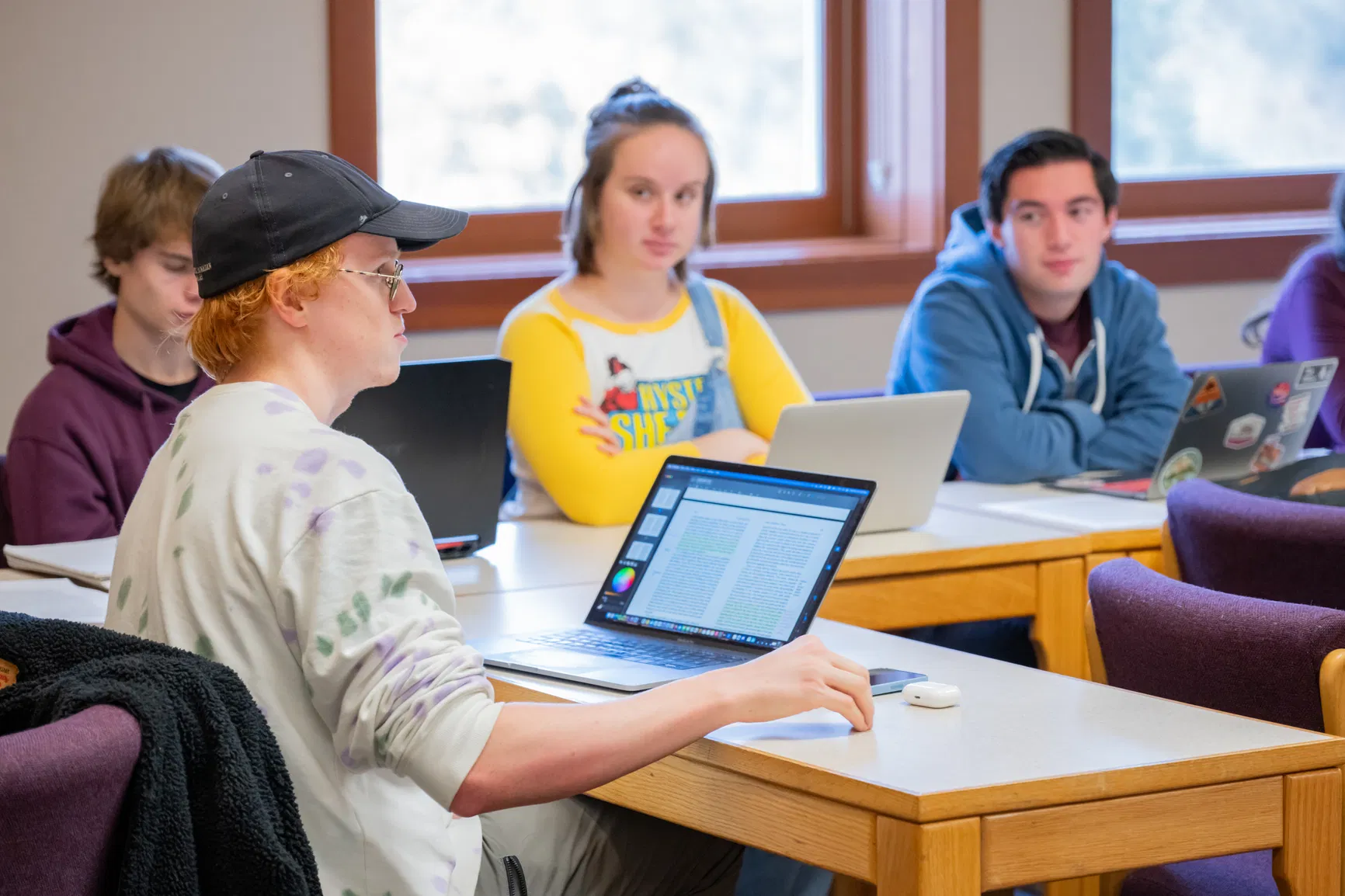
When he's not in the lab, Jeff argues politics and global issues on Willamette's highly ranked debate team.
"Debate is a lot like chess — you advance one move, that determines the next move and then it's all a giant strategy," he says. "You're expressing ideas in a forum, but it's still very logical."
The Future
Jeff plans to continue his research in graduate school — he has been accepted into the PhD programs at Stanford, Harvard, Caltech, Princeton, MIT and Columbia, but he is still deciding which to attend. He feels his liberal arts degree gives him distinct advantages.
"Willamette has helped me hone my writing skills. Zewail spends much of his time submitting grant proposals to fund his research.
"Willamette students often get into the best grad schools in the country because those schools understand the importance of being able to communicate your ideas effectively."